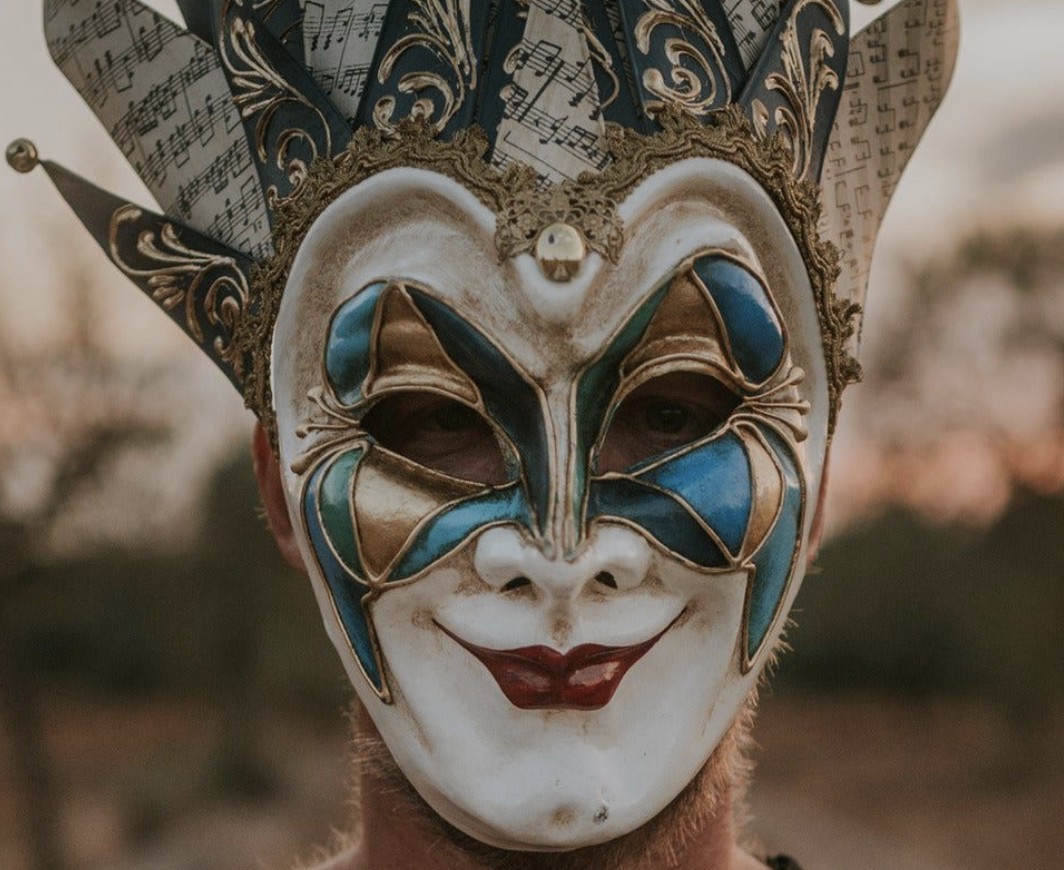
The bass drops like a sledgehammer, and ten thousand hands pierce the festival smoke. At the center of the sonic storm stands a figure straight out of a futuristic Venetian masquerade. He wears an ornate, grinning Joker mask—eccentric, unsettling, and wildly charismatic.
To the sea of ravers, the mask is a brilliant piece of branding. It’s the ultimate theatrical prop for the "King of High-Tech Minimal." But as the music thuds through the floorboards, a quiet truth hangs in the air: the mask isn't a gimmick to get people looking. Originally, it was a shield to keep them from staring.
Behind the velvet and the paint lies a story of fire, isolation, and an artist who literally remade his identity from the ashes.
The Crucible: A Six-Year-Old’s Nightmare
To understand the mask, you have to go back to Germany, to a six-year-old boy named Boris. In a flash of unimaginable horror, a school bus accident turned into a raging inferno. Boris survived, but the fire claimed a heavy toll, leaving his face severely burned and scarred.
Childhood is cruel to anything it deems "different." Boris grew up navigating the world through the heavy lens of insecurity, acutely aware of the glances, the whispers, and the invisible wall that his scars built between him and society. He became an outsider in his own life.
But isolation breeds a dangerous kind of creativity. Retreating from the judgment of the playground, Boris crawled into the safety of electronic frequencies. The studio didn't care what he looked like. The synthesizers didn't stare back. Music became his oxygen, his therapy, and his weapon.
The Venetian Gambit
Years later, Boris’s bedroom productions evolved into a dark, driving, melodic monster of a sound that the world needed to hear. But as he prepared to step onto the public stage, a ghost from his past blocked the door. The music industry is obsessed with the face, the image, the look. How could a man who spent his life hiding his scars suddenly stand under the blinding glare of a festival spotlight?
The answer came from the ancient, floating streets of Venice.
Inspired by the historic carnival masquerades—where kings could be peasants and peasants could be kings—Boris picked up a mask.
When he strapped it on for his early gigs, it was a revelation. The mask pulled off a spectacular psychological magic trick: it hyper-focused the audience on the music while granting Boris total anonymity. He wasn't the "guy with the scars" anymore. He was a creature of the night, a sonic shaman channeling pure, unfiltered techno energy.
The Ultimate Reclamation
"When I put on the mask," Boris has reflected, "I step into another dimension."
The mask acts as a psychological firewall. It filters out the anxiety, the self-doubt, and the baggage of that six-year-old boy trapped in a burning bus. Behind that grinning Venetian visage, Boris is invincible.
What started as a desperate psychological armor has transformed into one of the most powerful symbols in modern electronic music. Today, tracks like Gravity and Purple Noise sell out arenas worldwide. When fans buy their own replica masks to wear in the crowd, they aren't just celebrating a DJ; they are participating in a massive, global act of defiance.
Boris Brejcha didn't just survive his trauma; he weaponized it, turned it into art, and hid it in plain sight behind a smile. The mask is no longer used to hide a tragedy. It is a crown of absolute triumph.