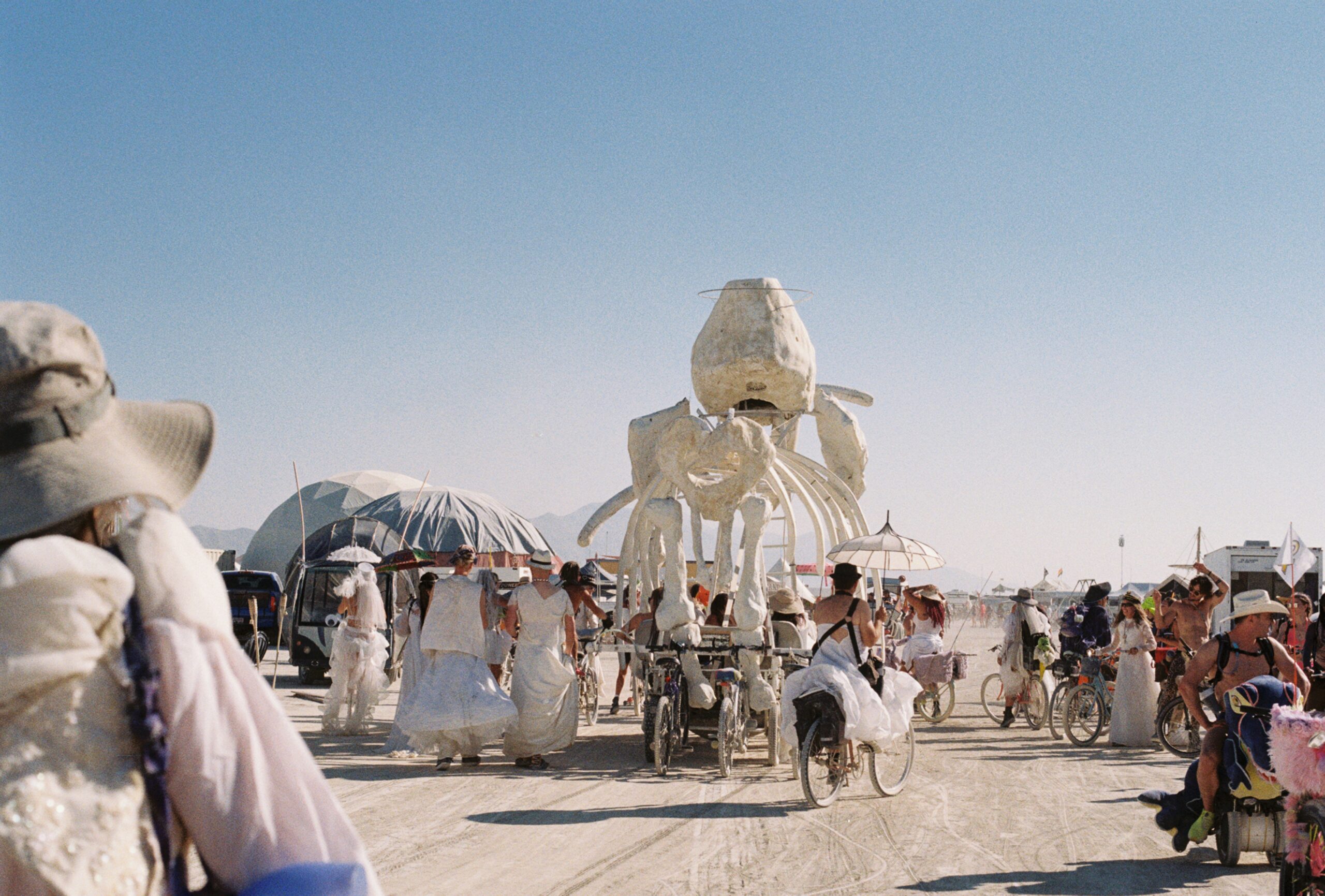
Burning Man is heading into its 2026 edition, themed Axis Mundi, with an unusual problem for an event known for hard-to-get tickets: the secondary market has gone soft, and resellers are struggling to turn a profit.
For the past few years, Burning Man has failed to sell out despite its reputation for scarcity. In 2026, that trend has deepened — organizers released one of their lowest-priced ticket tiers in recent memory, and demand on the resale market has cooled considerably alongside it.
Attending isn't cheap outright. Anyone traveling to Black Rock City, the temporary metropolis that rises each year in Nevada's Black Rock Desert, has to budget for travel, gear, water, and supplies on top of the ticket itself — veterans estimate the average attendee spends around $1,000 to have a comfortable week on the playa.
Burning Man doesn't sell a single general-admission price. Instead it uses a tiered system, where higher-priced tickets help subsidize access for other participants and fund the event's art and operations — in keeping with the festival's gifting-based, community-first ethos. For 2026, tickets range from $550 to $3,000, with the $775 tier positioned as the price that covers full participation costs for one person.
Resale is meant to run through Burning Man's official Secure Ticket Exchange Program (STEP), the only channel the organization considers fully safe for buying or selling authentic tickets and vehicle passes — a structure designed specifically to discourage speculative resale and scalping.
Despite the softer sales, Black Rock City will still rise in the Nevada desert from August 30th through September 7th, with its usual sprawl of large-scale art installations, theme camps, and round-the-clock performances. Whether prices tighten back up next year, or organizers have to rethink the ticketing model further, remains to be seen — for now, the city rages on.